2026
Developed with anonymous contributors connected to each exhibition site
Site-responsive computational installation with generative text and image, digital displays, and mobile interface
A memory may happen once, but it is met again through the conditions that surround it: the languages of a place, its weather, infrastructures, media environments, and temporal rhythms. Those conditions keep changing, and the memory recurs within a site-time field that never settles.
The work is centered on short personal memories donated by people connected to the exhibition site. The memory-holders remain anonymous, and the memories form fixed anchors throughout the work.
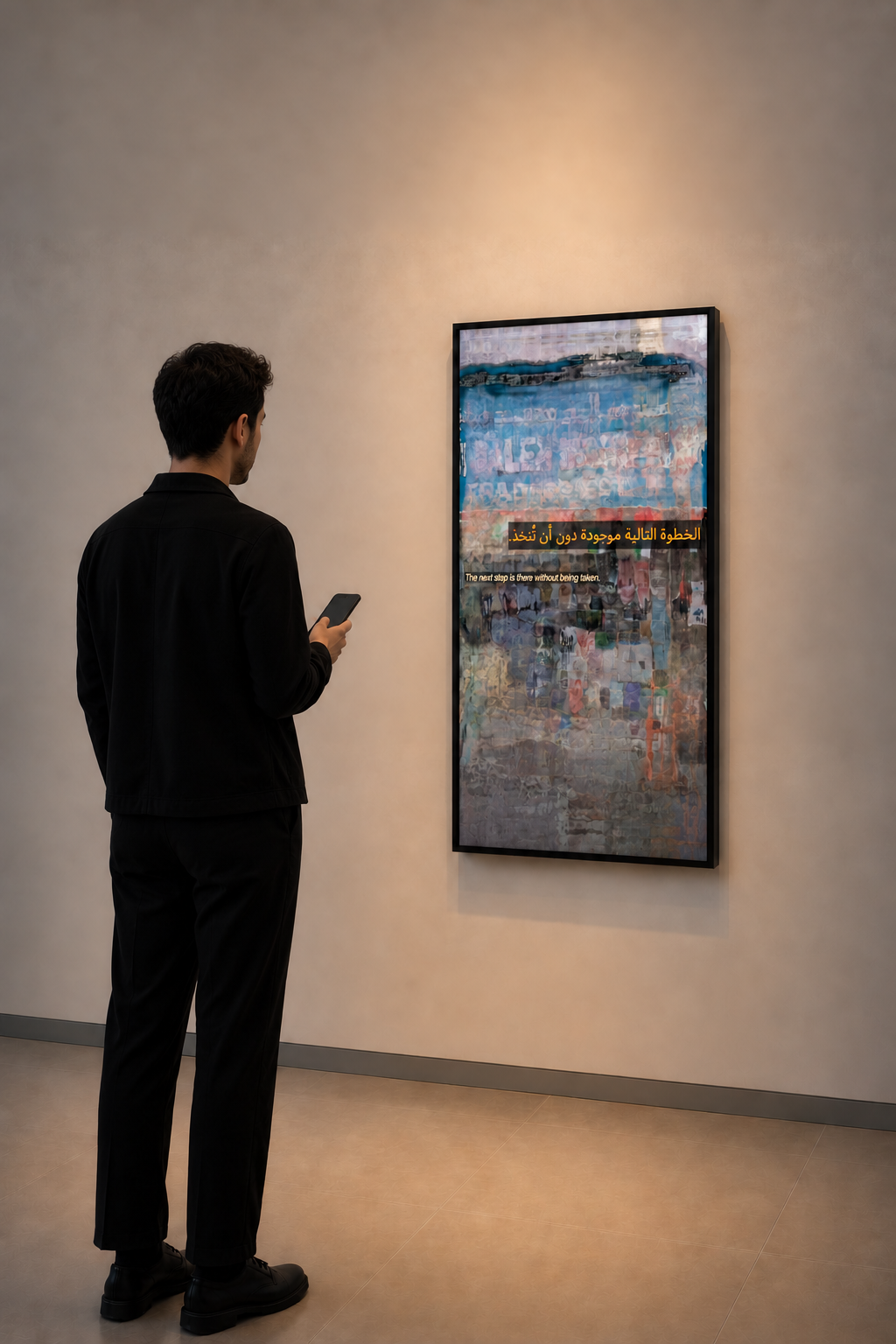
Six temporal lenses, attending through human, liminal, environmental, infrastructural, digital, and more-than-human time, gather vernacular traces and historical residues from the site as it is now. The lenses attend to the changing conditions through which those memories recur. Translation allows each memory to move through the languages of the site while remaining anchored to its situated reference.
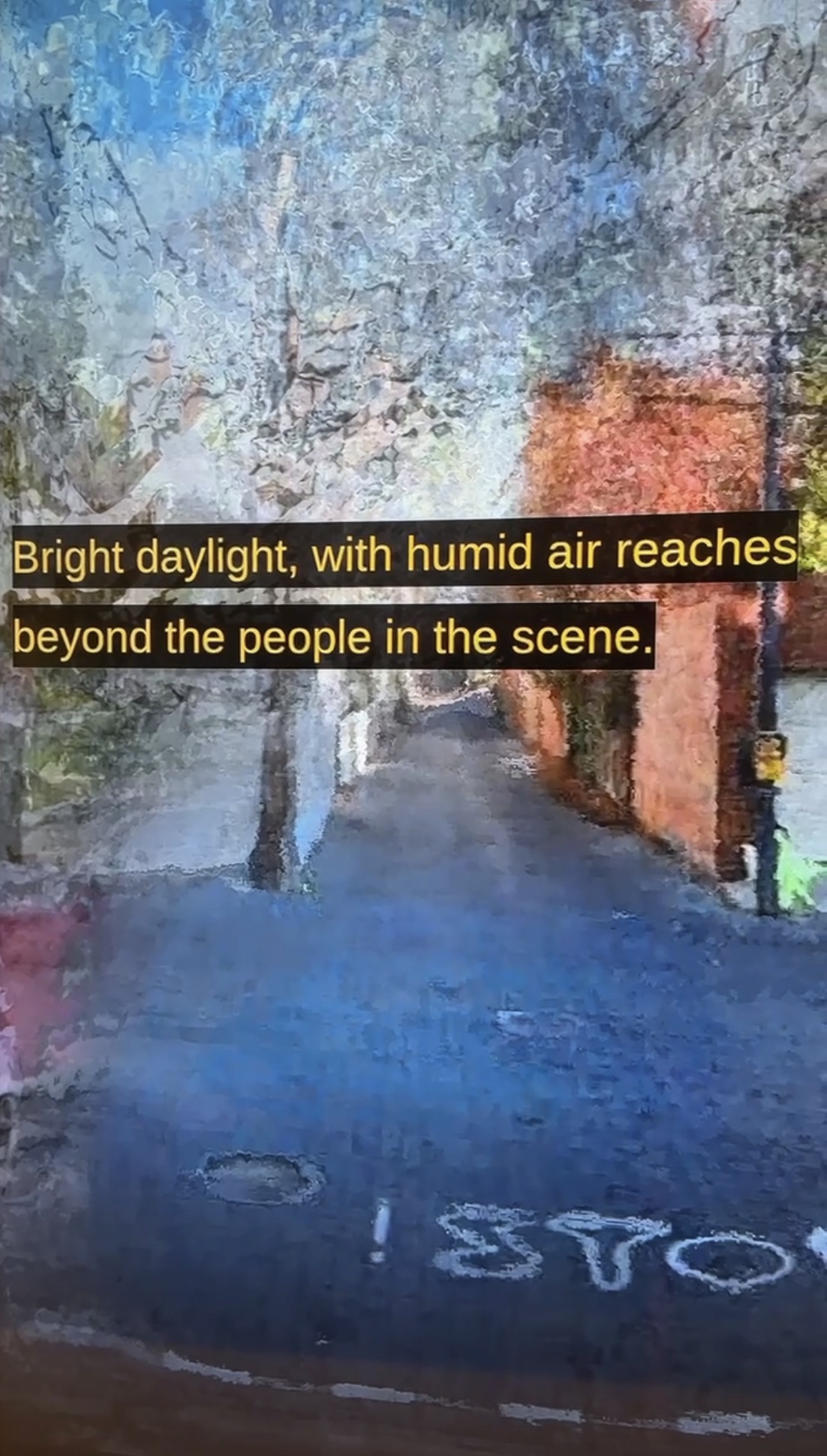
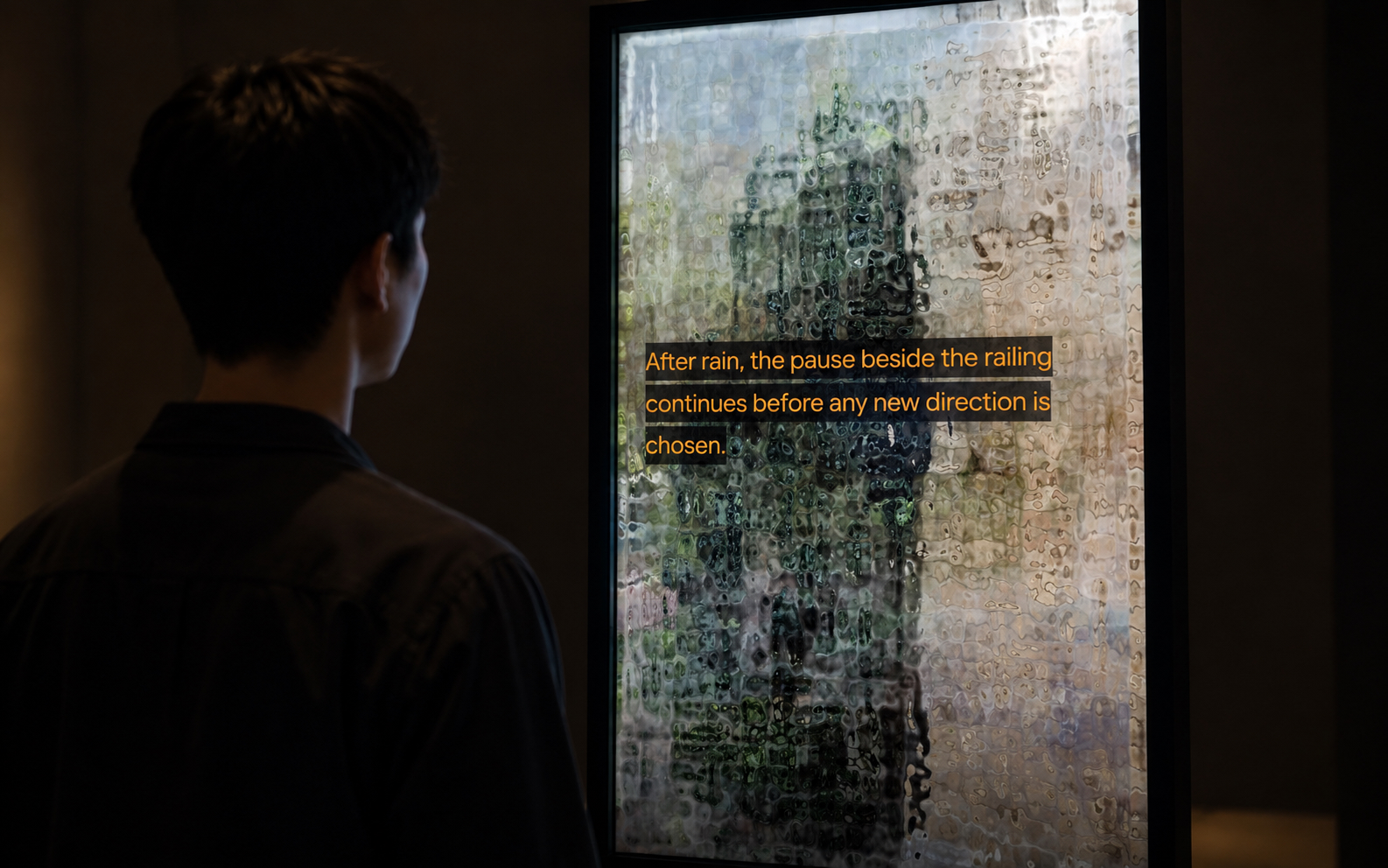
With every drift, the six lenses operate together within the changing conditions of the site. Environmental signals and site-specific traces reweight the field around each memory, giving rise to new keepsake texts and images. Each drift produces a different relational reading as memory, place, and time enter a new configuration.
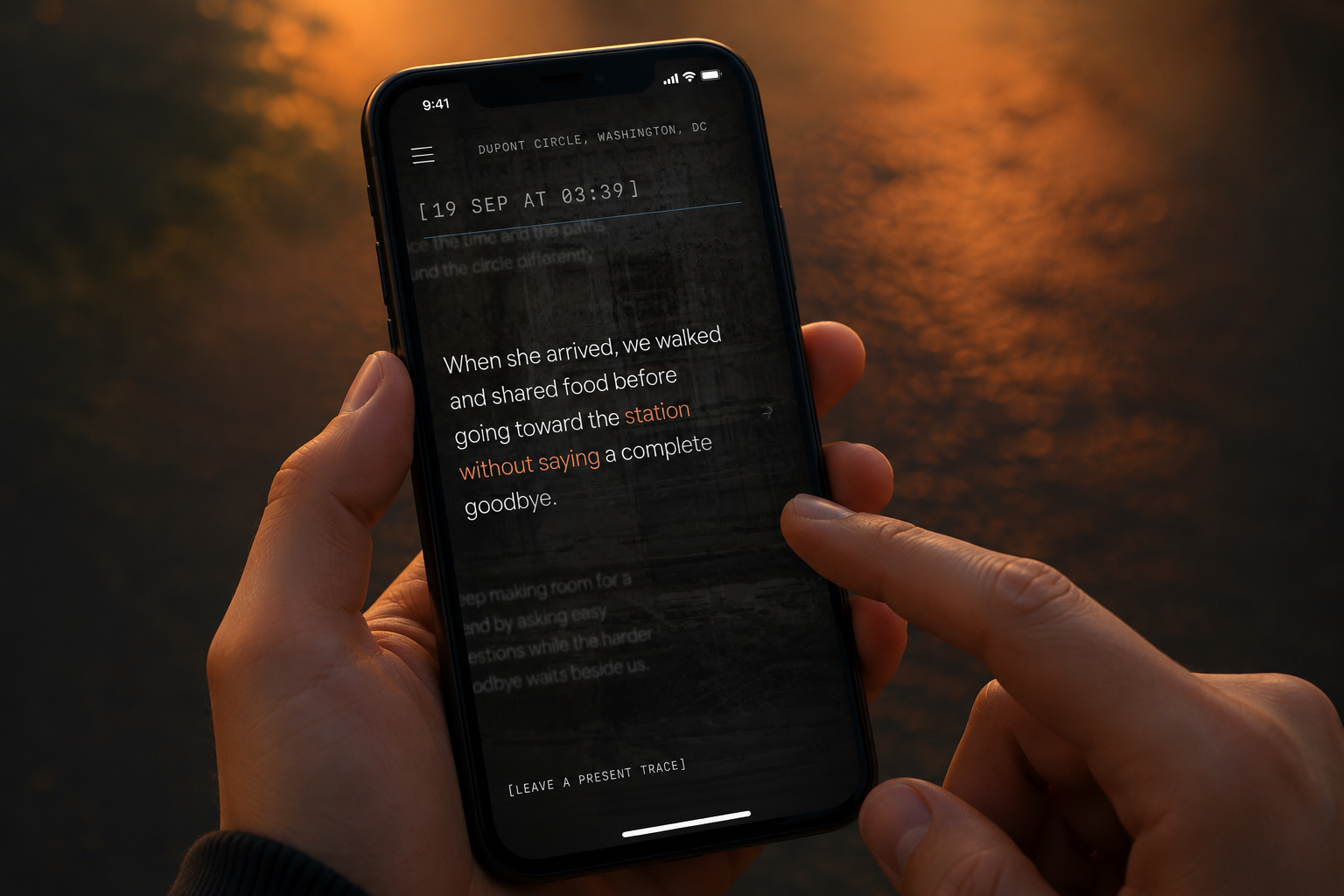
Digital screens and a mobile keepsake interface surface this evolving field. Visitors encounter partial readings shaped by the current configuration of conditions. Generated text and image overlays appear as perceptual residues of each encounter between a fixed memory and a changing site-time field.
Visitors may carry a keepsake reading briefly on their phones and leave a trace. These traces can become part of the evolving site-time field, participating in the conditions through which later encounters take shape.
To encounter a memory through the registers of a place is to find it recurring differently each time, as new conditions gather around it while something irreducible remains.
One of two related installations in the Keepsakes in Every Hair series, with Migration, exploring memory as a situated field of recurrence rather than a stable record.