2026
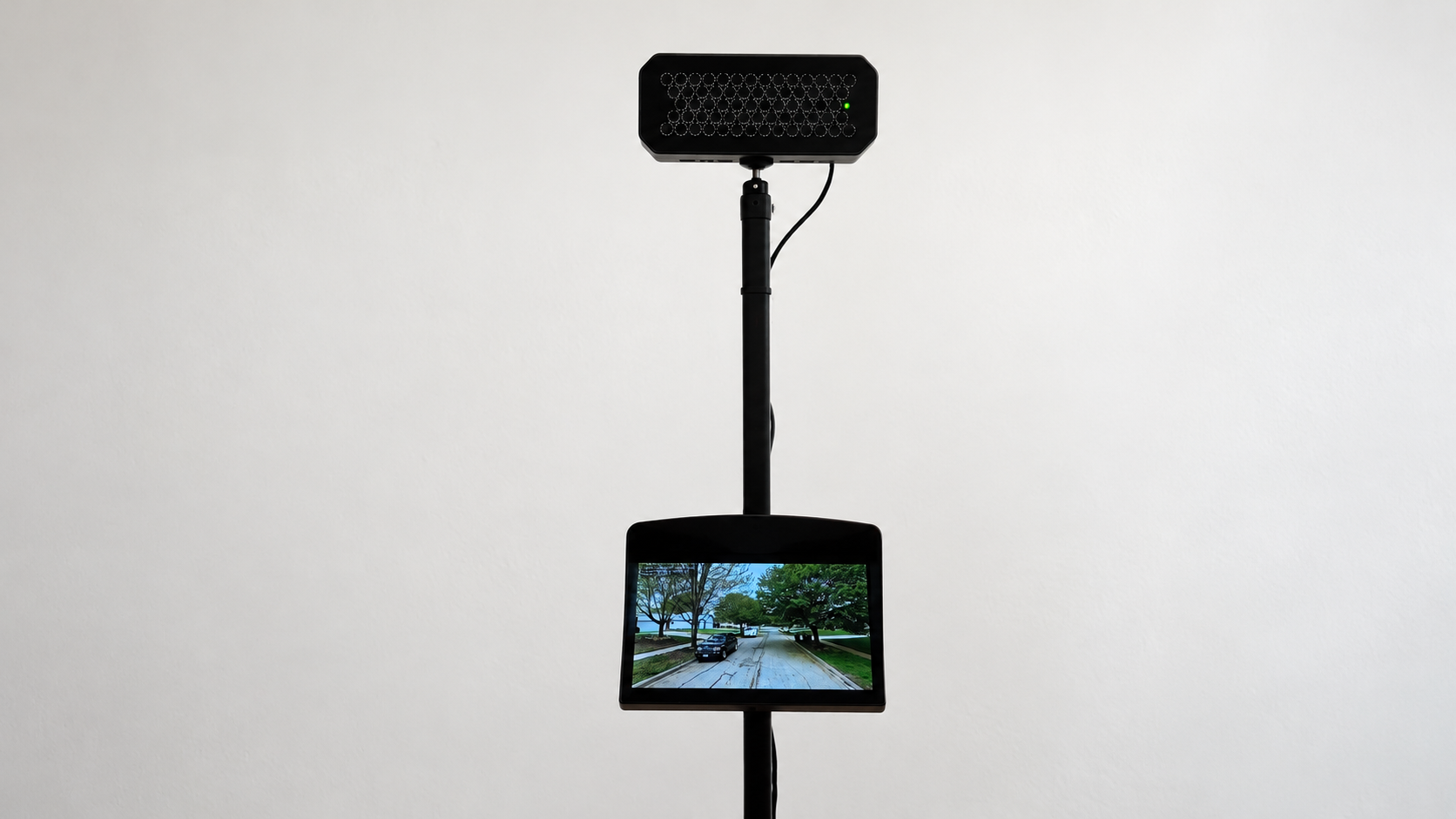
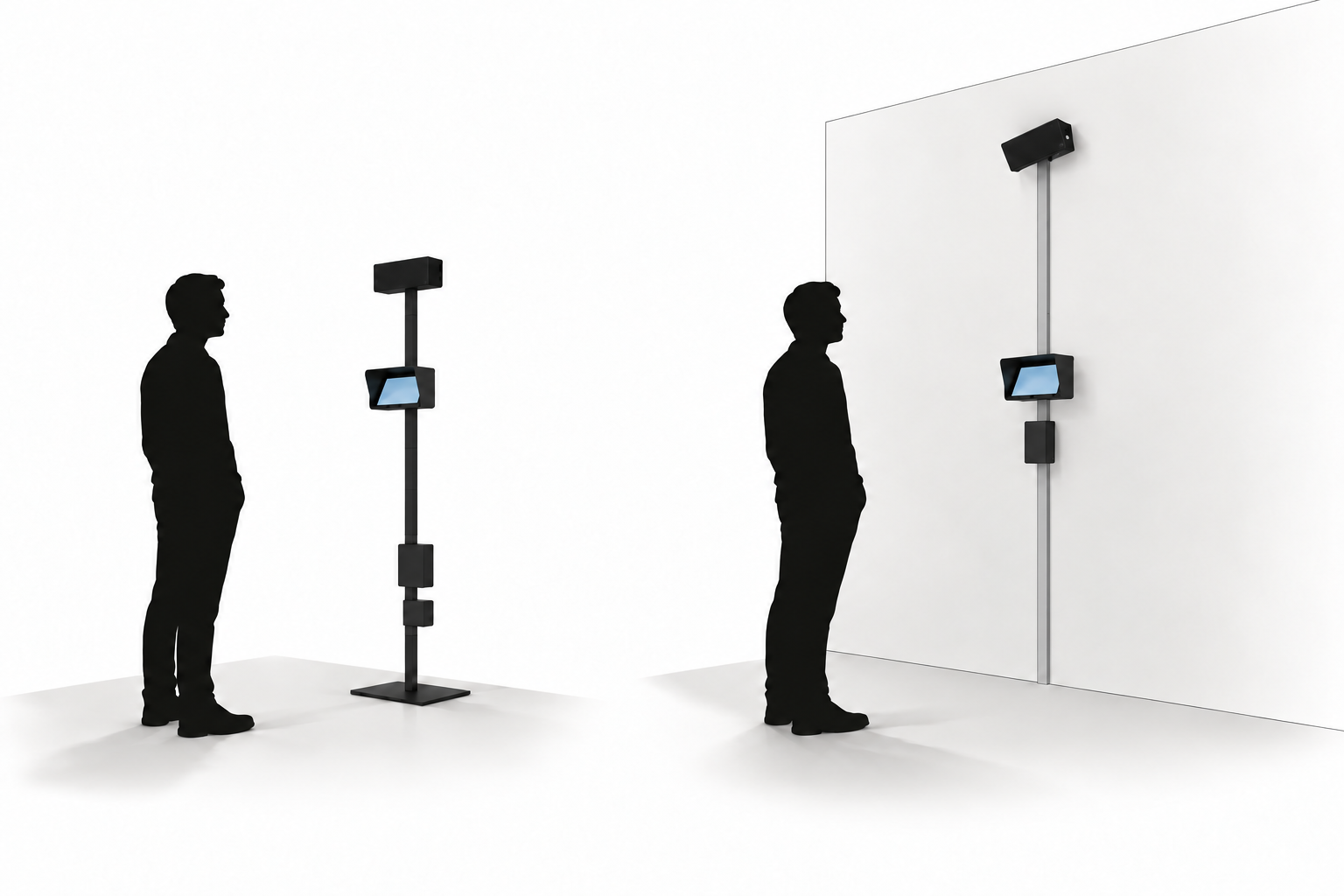
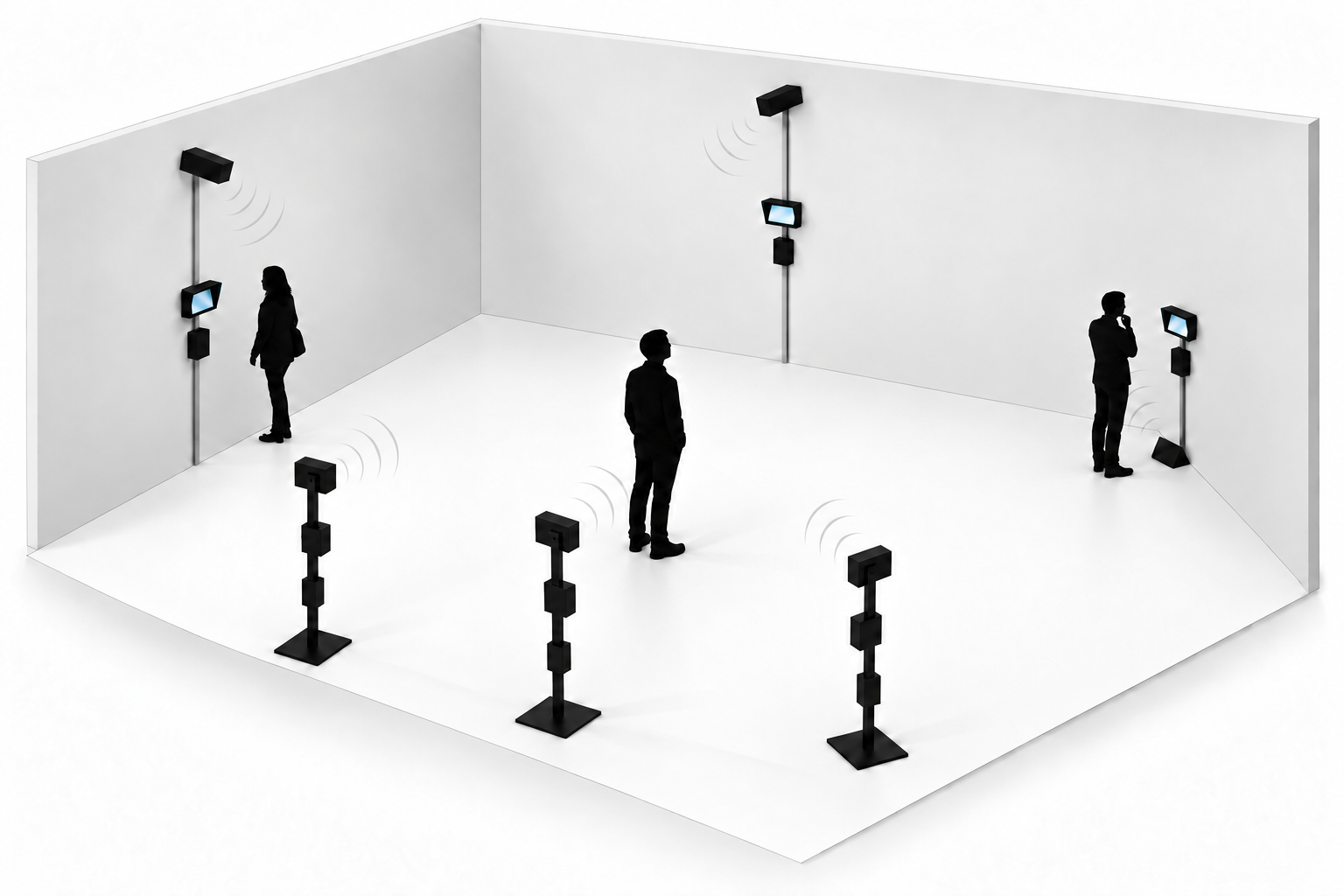
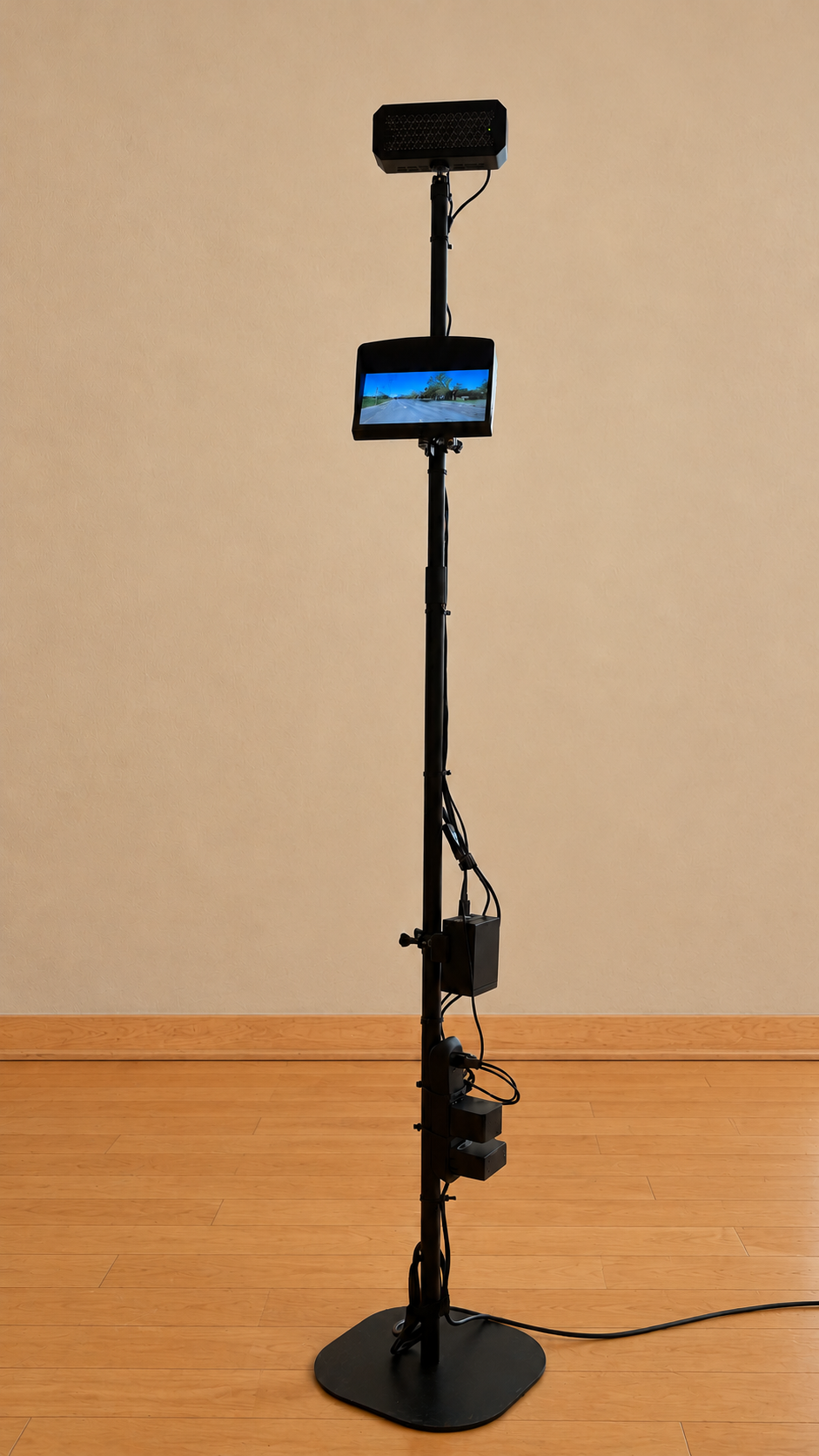
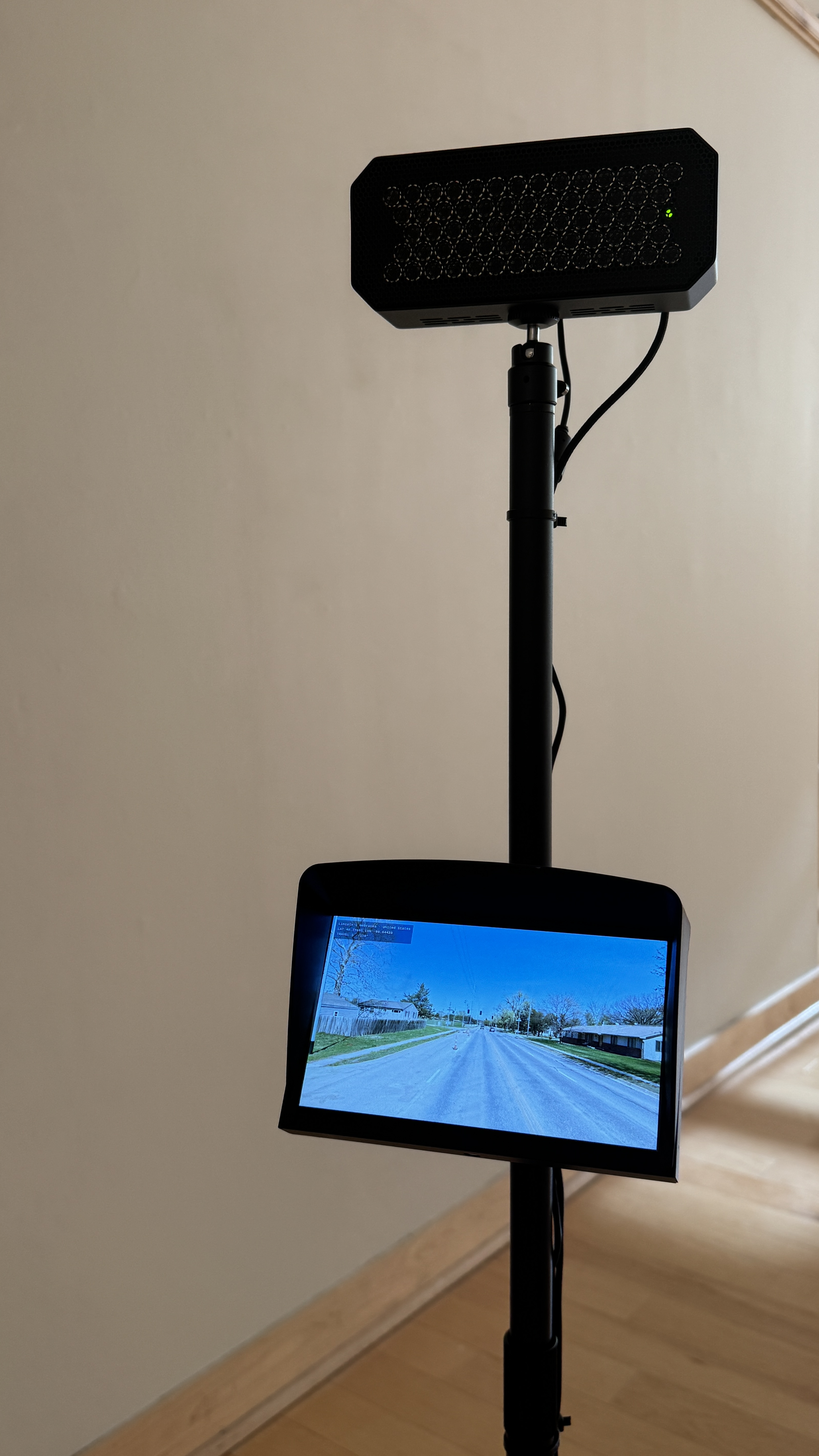
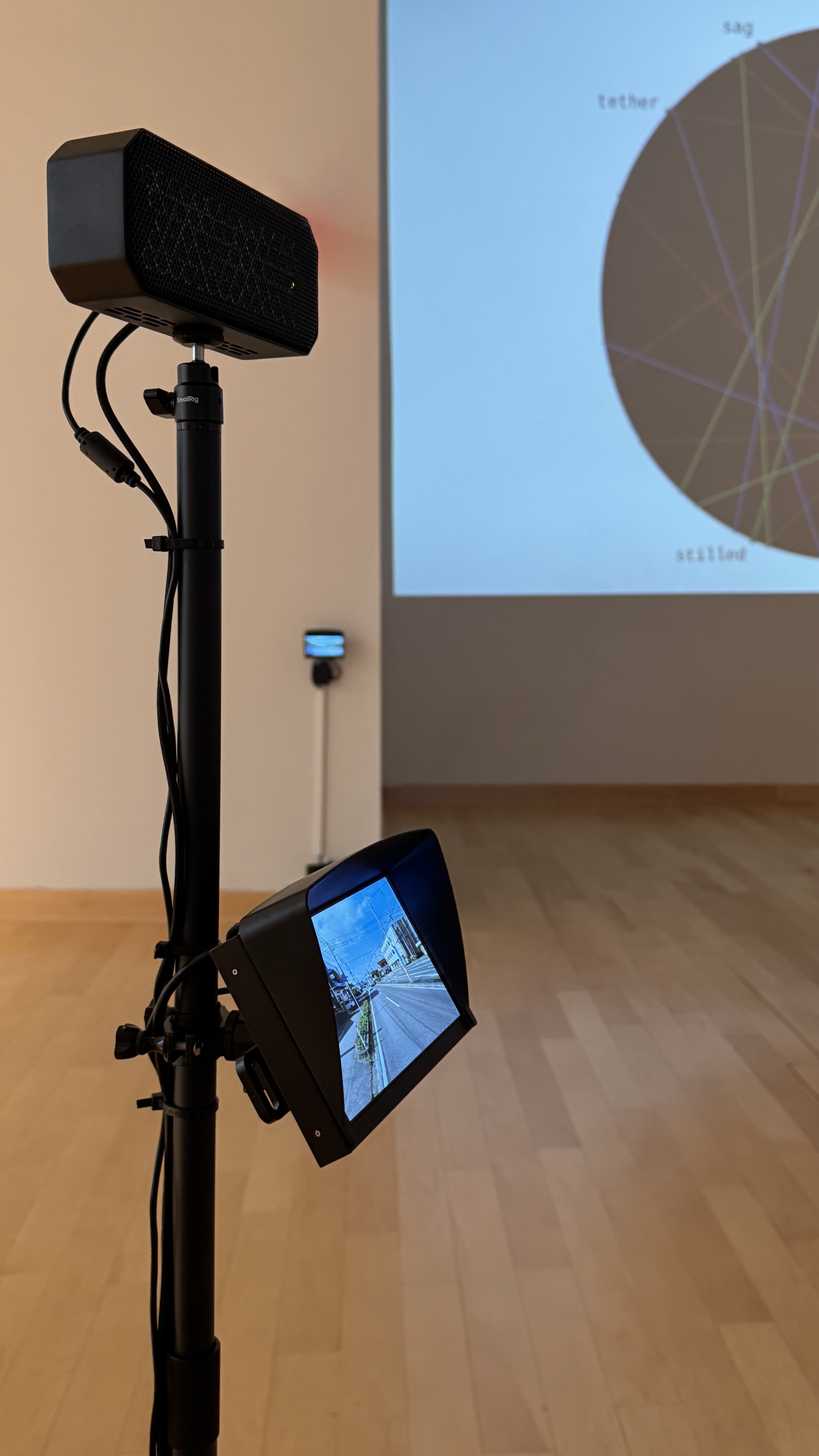
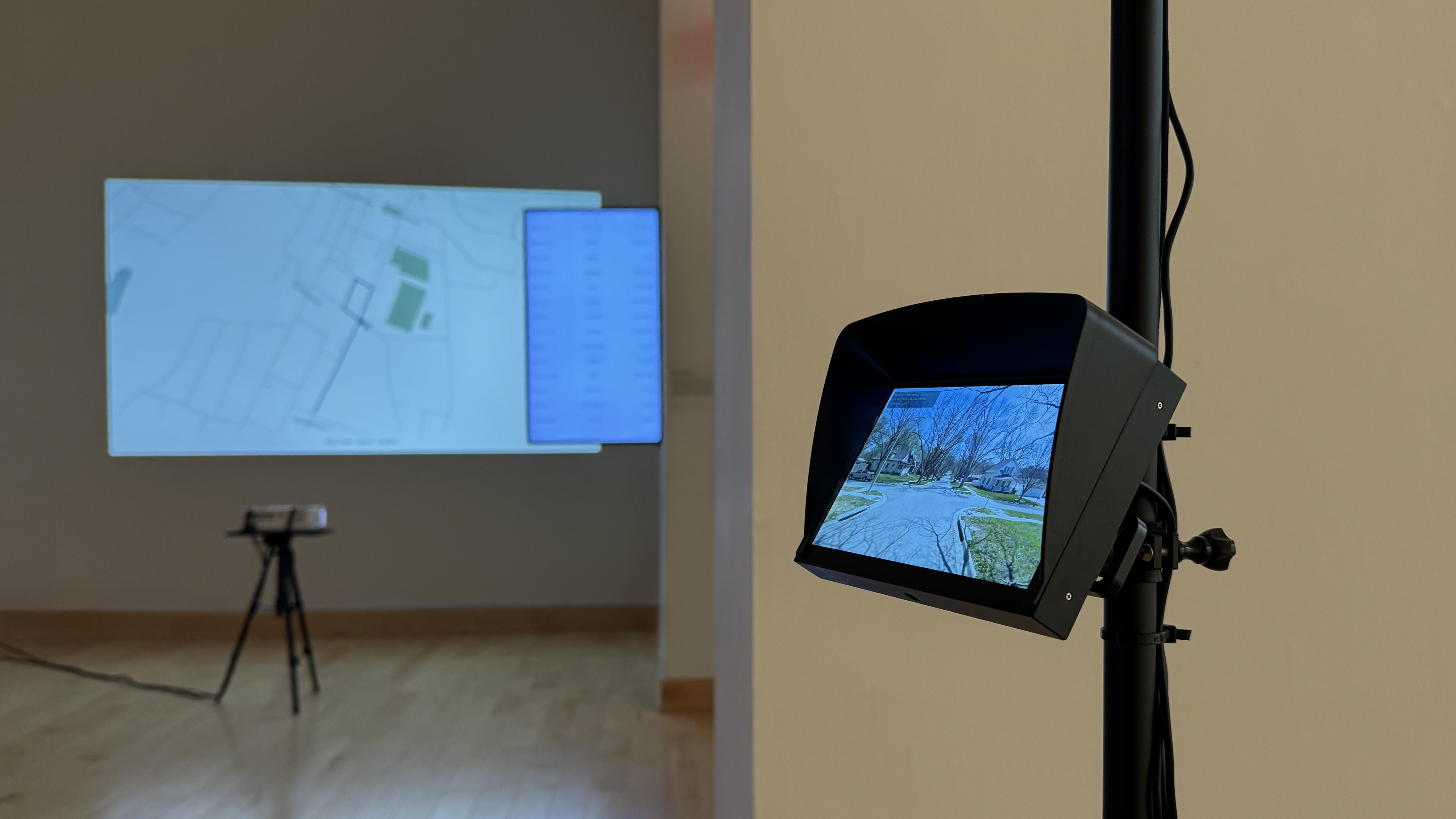
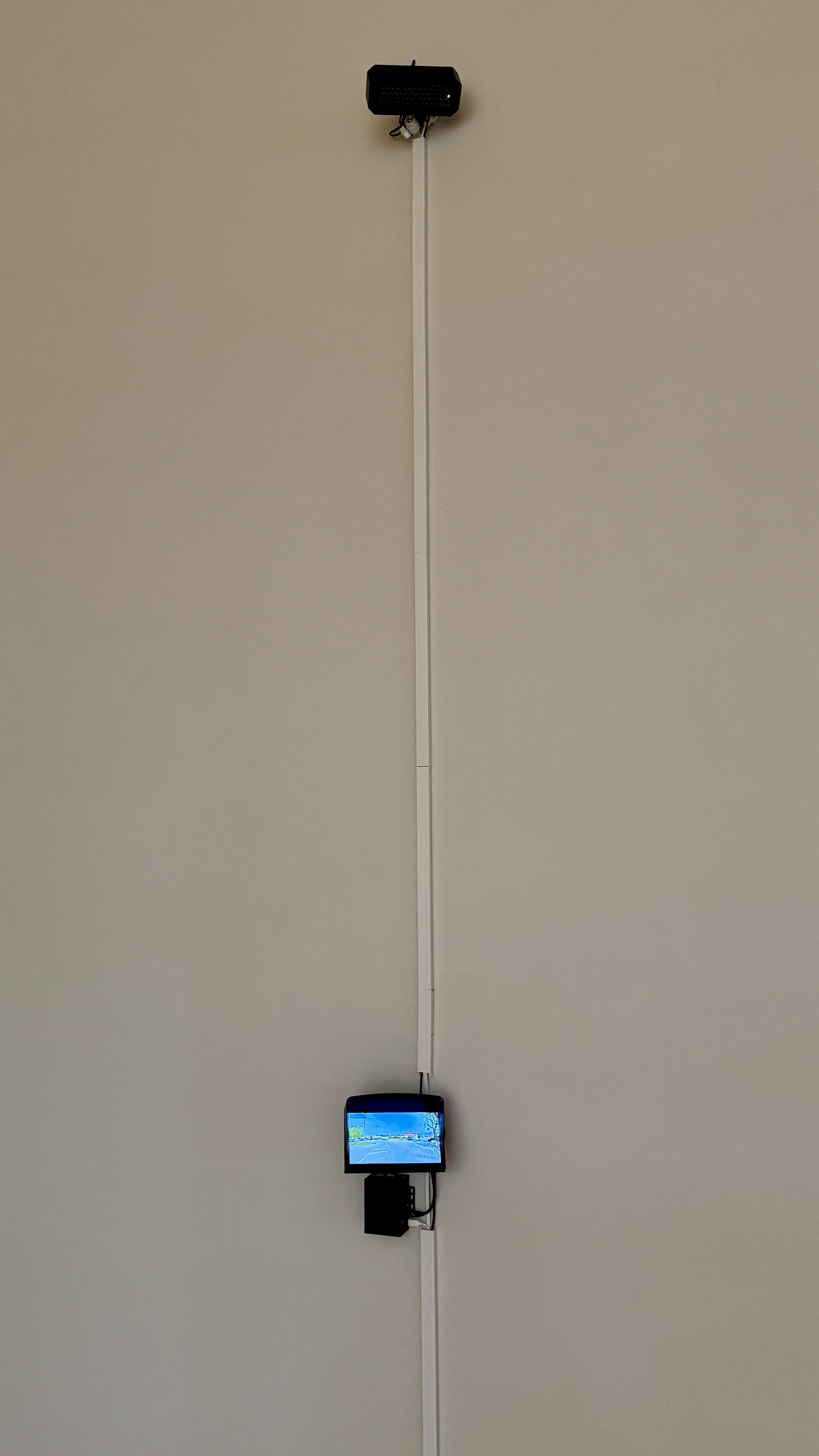
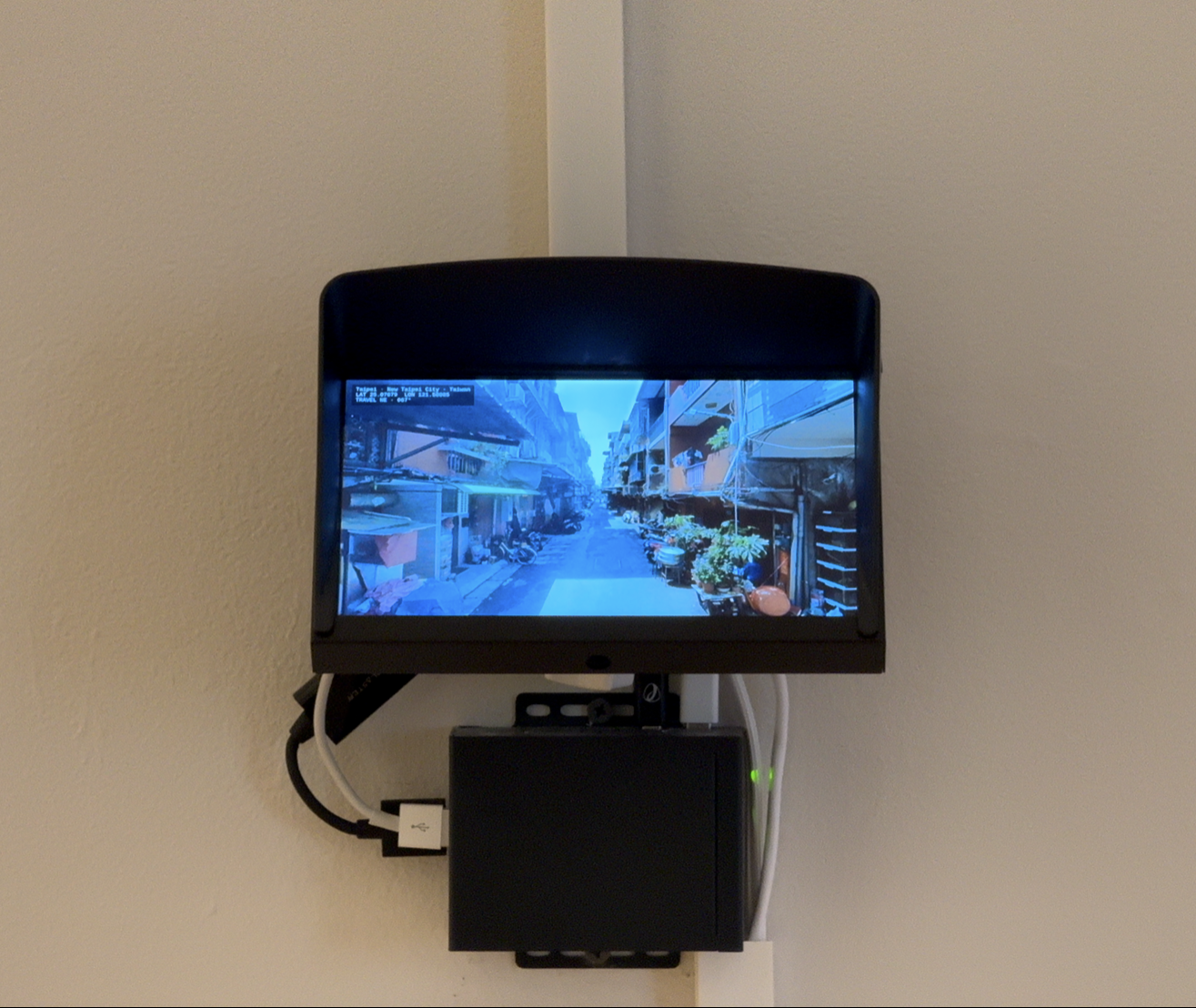
Networked sculptural installation with six custom-built freestanding and wall-mounted modules, LCD displays, ultrasonic directional speakers, Raspberry Pi computers, distributed machine perceivers, six temporal lenses, generative text, and spatial sound.
Migration examines how memory persists beyond the individual, carried across places, times, and technological systems through changing conditions of perception.
The work begins with six personal memories rooted in different places and periods of a life. Held as fixed anchors, they enter a network of six machine perceivers, each operating through a distinct temporal lens: human, liminal, environmental, digital, infrastructural, and more-than-human.
Virtual travelers move backward through memory sites using Google Street View, as though looking through a rear-view mirror. Their directions shift in real time through convergence, divergence, and drift, synchronized with a projected field map in the exhibition. Street-level imagery, weather, tides, flight paths, and live broadcasts from local radio stations at the memory sites bring the present into contact with remembered places. The broadcasts are computationally retextured and refracted into generative radio stories, while the temporal lenses produce textual and sonic residues through their encounters with these changing conditions.
The six sculptural modules distribute these readings throughout the space. Their ultrasonic directional speakers project concentrated beams of sound over a distance, reflecting off surrounding walls to create localized auditory fields. Voices may seem to whisper directly into visitors’ ears from afar or emerge from multiple directions, shifting, overlapping, and disappearing as visitors move.
Across these distributed images, voices, and temporal encounters, memory continues beyond its originating moment, entering new relationships with the present.
Migration is part of the Keepsakes in Every Hair series, alongside Drift