Spring 2026
A space is already organizing the people who move through it, directing attention, pacing, and behavior before anyone can name how. This course builds on that observation through what we call site-specific reframing, applied to a campus building and a downtown block. Space is treated not as a backdrop but as an argument: a structure of decisions about who moves where, and how. The working hypothesis is that the strongest projects do not simply reveal how a place directs a body; they become systems that direct it differently.
Students work through three modes across the semester. In Project 1, they guide attention through movement, pairing a large-scale supergraphic with a digital companion interface to build a short journey through a campus building that reveals how a familiar space is already structured. In Project 2, they reframe a site through projection mapping, using light and motion on a downtown building to introduce a new reading of a place people pass through daily. The semester culminates in Project 3, a collaborative immersive installation in which teams combine projection mapping and supergraphics to transform a gallery into an environment visitors move through rather than a work they simply view. What changes when a familiar place is read not as a neutral container, but as a structure of decisions that could be made otherwise?
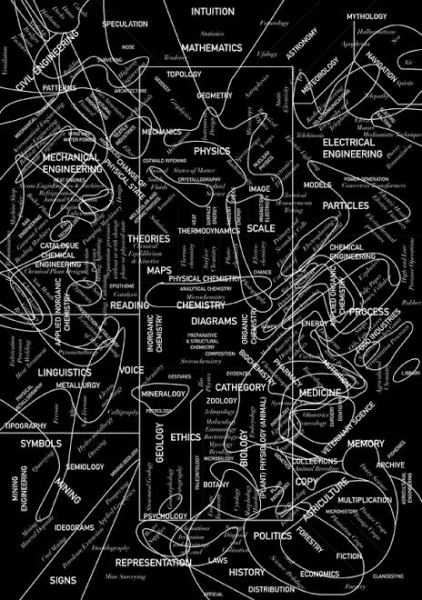
Reference: Erik Beltrán, concept map