2026
Interdisciplinary exhibition integrating networked sculptural installations, distributed machine perceivers, six temporal lenses, moving image, spatial sound, computational text, musical composition, live piano performance, and spatial intervention.
Collaborators
Memories and Musical Compositions: Masayoshi Ishikawa
Guest Artist: Seungho Lee
Dance Videography: Jeremy Starn
Dancers: Madeline Spivey, Heidi Pennington from Harrisonburg Dance Cooperatives
Exhibition: Duke Hall Gallery of Art, James Madison University, Harrisonburg, Virginia October 28 – November 20, 2026
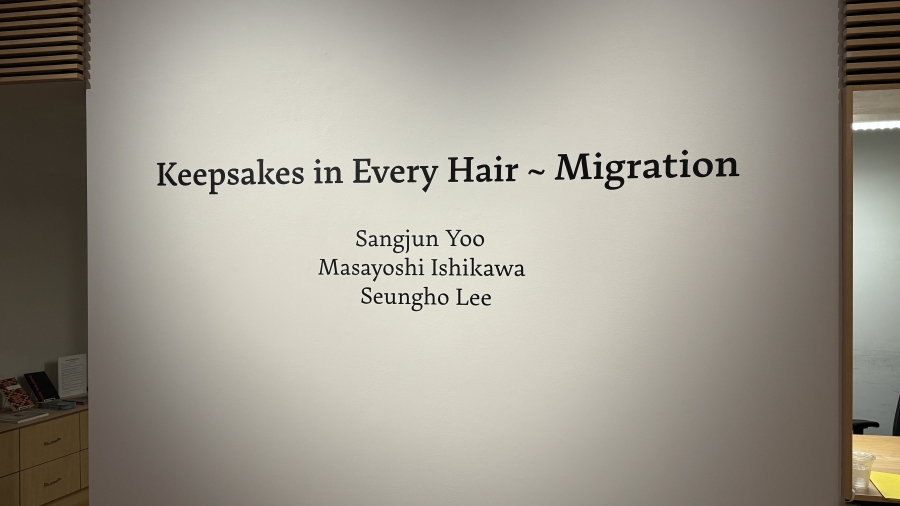
Keepsakes in Every Hair ~ Migration explores how memories persist beyond their originating moments, carried across places, technologies, and changing conditions of time. Beginning with six personal memories from composer Masayoshi Ishikawa’s life between Japan and the United States, the exhibition brings human experience into relation with machine perception, bodily movement, sound, and spatial form.
The memories remain fixed as points of reference, while a distributed computational system encounters the places associated with them through changing present conditions. Six temporal lenses attend to these encounters differently, allowing multiple readings of the same world to emerge without settling into a single account.
Across the gallery, networked sculptures, moving images, virtual journeys, live views of distant airports, and musical compositions establish different ways of experiencing time. The installation extends beyond the screens into the surrounding architecture, where spatial interventions, directional sound, and visitors’ movements shape how its fragments are encountered.
Rather than reconstructing the past, the exhibition considers how lived experience continues beyond the individual, and how memory can be carried into new relationships without losing its connection to the life from which it emerged.
Installation Components by Sangjun Yoo
01 — Migration: Distributed Perceivers
Six-channel networked sculptural and spatial sound installation
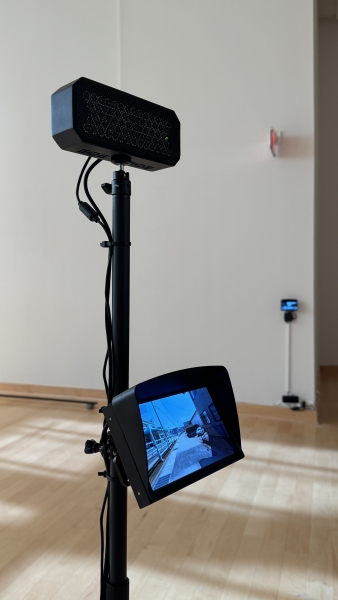
Six custom-built sculptural modules, installed as freestanding and wall-mounted structures, combine LCD displays, Raspberry Pi computers, and ultrasonic directional speakers. Each operates through a distinct temporal lens: human, liminal, environmental, digital, infrastructural, and more-than-human.
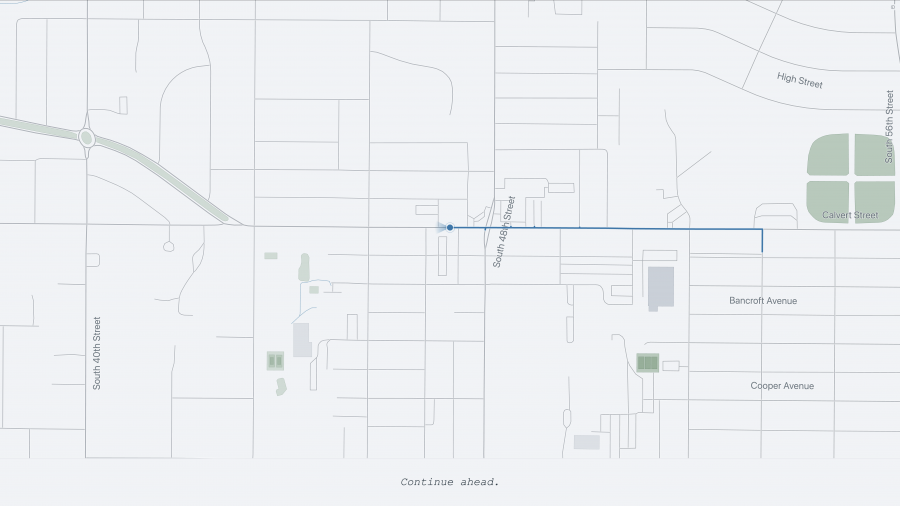
Virtual travellers navigate places associated with Ishikawa’s memories through Google Street View, moving backward as though looking through a rear-view mirror. Street-level imagery, radio broadcasts, and changing environmental and infrastructural conditions inform the machine perceivers’ readings of these memory sites.
The directional speakers project narrow beams of sound that can reflect off gallery walls, producing localized auditory encounters. As visitors move through the space, distant voices may seem to whisper directly into their ears, while others recede or disappear. Together, the six modules create a distributed field of perception in which different temporalities coexist.
02 — Bodies, Travellers, and Temporal Readings
Four-channel moving-image and computational installation
In collaboration with Harrisonburg Dance Cooperative
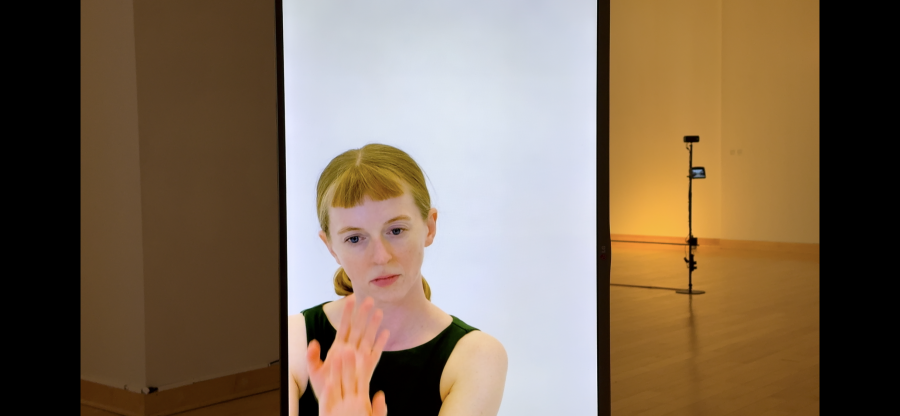
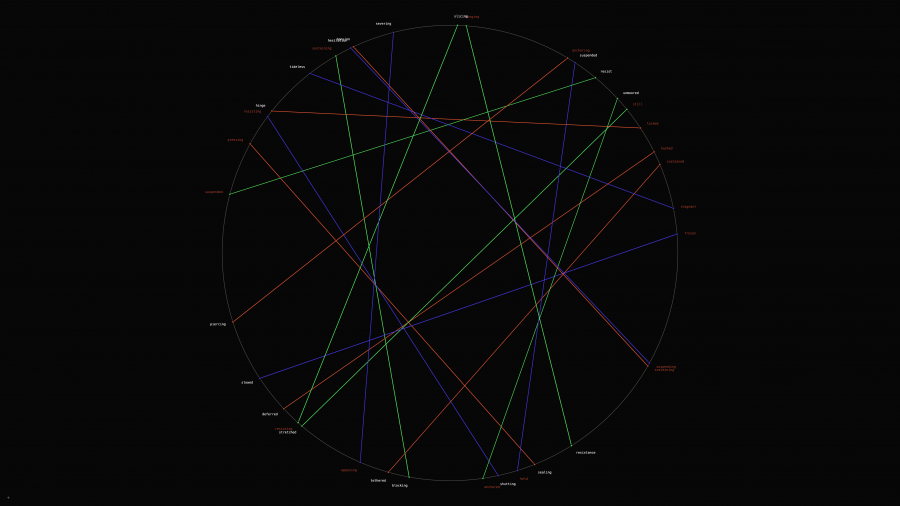
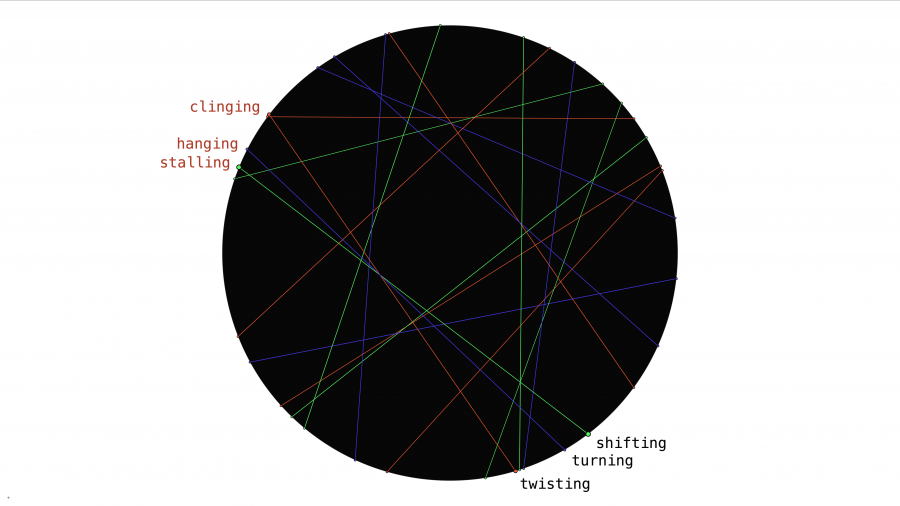
Two filmed dancers, a virtual traveller’s field map, and a screen of changing computational text form a four-channel installation.
The dancers introduce bodily rhythms and gestures alongside the virtual journeys undertaken by the six machine perceivers. The field map traces movement through places connected to Ishikawa’s memories, while the text screen reveals moments of convergence, divergence, and drift among the temporal lenses.
Together, these channels bring embodied movement, geographical distance, and computational perception into a shared but continually shifting experience of time.

03 — Departures, Arrivals, and Waiting
Real-time video and sound installation
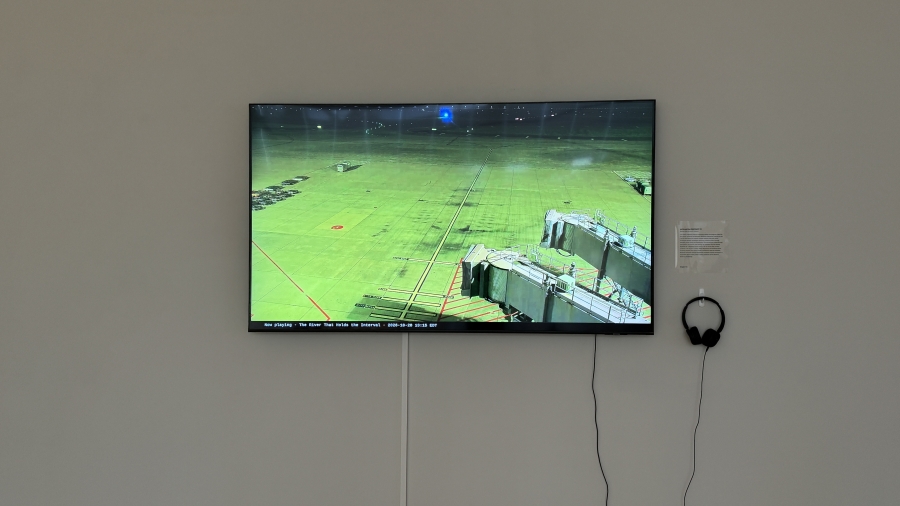
Live views of distant airports accompany spoken monologues shaped by the cultural and historical contexts of places associated with Ishikawa’s memories.
The voices unfold through anticipation, recollection, and waiting: for someone who has departed, for a departure yet to come, or for an arrival that remains uncertain.
As aircraft depart and arrive in recurring rhythms, the monologues move between presence and absence. Personal memory and distant infrastructural activity meet in a suspended sense of time, where movement continues even as waiting remains.
04 — Residues and Musical Response
Networked computational and audiovisual installation
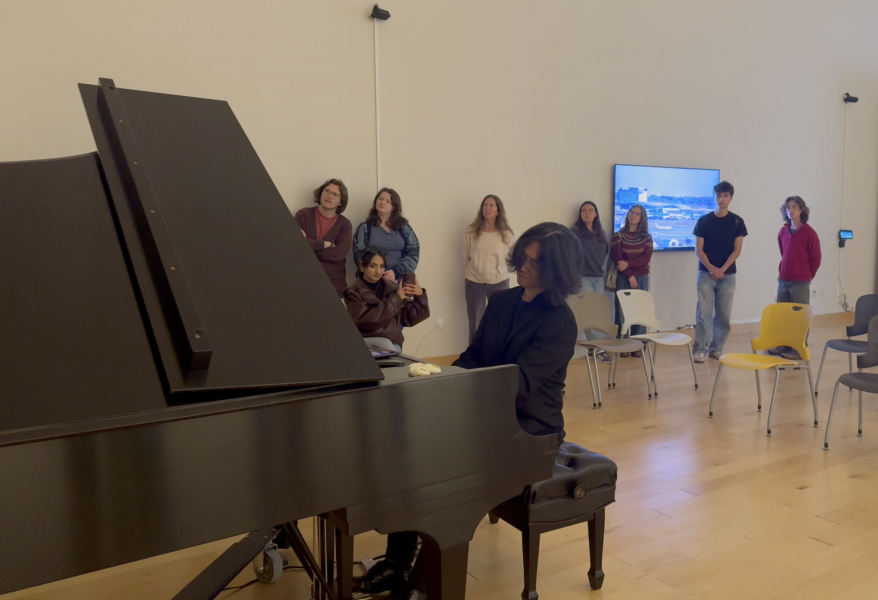
Music and live performance by Masayoshi Ishikawa
Six computational temporal lenses encounter real-time information from places connected to Ishikawa’s life. Their readings produce residues: fragments that register how memories held in custody relate to a world that continues to change.
These residues appear on a central display and circulate through the exhibition’s images, sounds, and movements. At moments, the computational readings enter into relation with Ishikawa’s musical compositions.
During the live performance, Ishikawa responds to these sonic and perceptual residues through piano improvisation. His presence brings the lived experience from which the memories originated into dialogue with the systems that carry them.